After a bit of a fall hiatus due to all the stuff that’s happening everywhere, here’s another installment in my Anthropology the Gathering (ATG) roundup:
1) Blade Runner and anthropology:
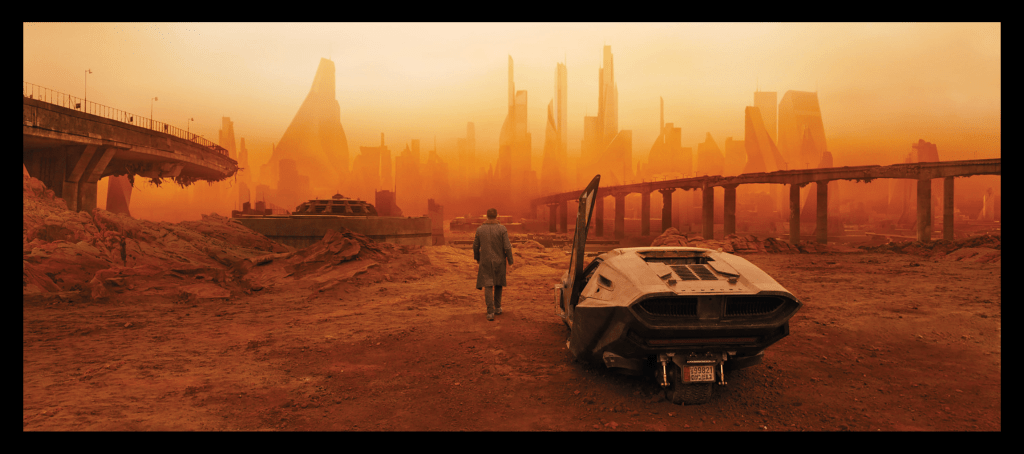
I got to teach my class on culture, film, and media this past fall quarter. We watched Blade Runner 2049 and read a 2021 piece by Rebecca Gibson called “From Fake Cop to Real Blade Runner: A Tripartite Comparison of the Role of Androids and Replicants as Laboring Beings.” Gibson takes an anthropological look at themes such as labor and power in the whole arc of the Blade Runner saga (from the PK Dick Novel to the 1980 and the 2017 update). She argues for the importance of looking at the stories that we tell, but also points out that the stories we tell or even *can* tell are shaped by larger patterns of history and power. She explores how the slightly changing ways in which the stories in the Blade Runner saga have been told reveal social tensions, conflicts, and shifting structures and norms in society over time. Gibson encourages us to see media as something that is both a product and reflection of society…while also being something that shapes society in turn. As Gibson puts it, “Art both reflects and propels reality.” Gibson also includes a nice reference to Levi-Strauss to add to her point:
We are all storytellers, says theorist Claude Levi-Strauss, and those stories influence how we speak about ourselves and others, how we define ourselves, our origins, our futures, the fabric of our beings [114].
2) That brings me to Star Wars:
Continuing with Gibson’s idea that art reflects and propels reality, think about how power and war have been portrayed in the Star Wars franchise (and its spinoffs) over time. The classic trilogy was all about the small band of unlikely heroes who challenged the massive, heavily-armed imperial force. Those films spoke to a range of issues in the late 1970s and early 1980s, including fears about state power and weapons of mass destruction (among other things). The more recent spinoff series ‘Andor’ includes a much more detailed and drawn out depiction of how authoritarian power develops…and how resistance to that power actually looks. There’s a reason why, in these times of rising authoritarian power, Andor resonates so strongly. Here’s a recent piece from Status News that speaks to some contemporary connections. I’ll leave the Star Wars theme with Maarva Andor’s monologue, which speaks for itself:
2) Anthropology and Democracy:
Speaking of issues of power, governance, and authoritarianism, Eduardo Dullo has a nice entry at the Open Encyclopedia of Anthropology on democracy. Here’s a selection:
Democracy was frequently promoted in the second half of the twentieth century as a remedy for dictatorship or colonial rule, transforming the political regime into one where ‘the people’ are in charge. Yet, anthropologists have demonstrated that asymmetrical power relations are embedded in definitions of democracy, including who counts as ‘the people’ and when. Therefore, anthropologists have concentrated on uncovering the power dynamics and political rationalities that uphold existing democracies and their inequalities, highlighting the gap between their promises and actual realities.
3) The old anthro community
A bit of the old anthropology community from back in the Twitter days broke out in response to this post via the folks at Cultural Anthropology:
What would it take to make #AnthroSky what #AnthroTwitter was?— Society for Cultural Anthropology (@culanth.bsky.social) January 14, 2026 at 6:01 AM
There were a few follow-up responses here as well. I find myself asking these kinds of retrospective questions every now and then, but such questions often end up feeling very ‘You can’t go home again.’ I think Tim Elfenbein put it well when he wrote:
There’s no way to reproduce the glory days of media regimes: newsletters, listservs, wikis, blogs, micro-blogs, etc. The density & effervescence of publics, organized through whatever channel, is always transient. It is time to reflect, mourn, & move on. And to start again.
Here’s to starting new again.
4) Old coasts:
I happened upon this 2019 post from John Hawks that discusses how capable early humans may have been when it came to crossing ocean water. I think John reposted it recently. In general, I think the coastal dimension of human history could use more attention, so I love pieces like this. Humans have been dealing with oceans and coasts for much longer than many folks often guess or imagine. With that depth of experience comes knowledge and skill…humans likely didn’t migrate through changing coastal environments just through luck or chance. Hawks makes this point in his post:
Many archaeologists doubt that any hominins 700,000 years ago, or a million years ago, or even Neandertals 100,000 years ago, had the cultural and cognitive ability to make boats. They think it is more likely that some “lucky” individuals were caught up in a tsunami, and washed across the sea from Java or Borneo to these islands.
To support this idea, they point to the 2004 tsunami that affected Aceh, Sumatra, and washed many people far out to sea. Some of them survived for many days before being rescued, as described in this article from the Telegraph. That notion is not impossible. Maybe some ancient hominins were lucky survivors.
But I’d rather give early hominins a little credit for knowledge of their environment.
I agree. It’s valuable to consider the possibility that humans in the distant past were both knowledgeable and skilled when it came to dealing with their environments.
5) Draw your cell phone!
Colleen Morgan has a great assignment where she has her students draw their cell phones. She recently assigned it for a seminar class, and I love one of her student’s responses: “This is the most chaotic thing I’ve ever done.” You can read more about the assignment on her site. I have been teaching a class about culture, film, and media for the past decade, which combines the work of Neil Postman with anthropological approaches to media and culture. One of the main points of the class is to use anthropology to help students rethink their relationship with and understanding of media. One way to do that is to look closely at the things we do–and use–everyday. I have one assignment in which students conduct a short ‘media observation’ by looking closely at how people watch TV, play video games, or use their phones. Adding a version of Colleen’s assignment–and a bit of a materialist and archaeological eye–might be a fun addition.
6) Finally: Luis Arraez
One thing I have been thinking about a lot this past year is how and why people can still follow sports–like baseball–when society seems to imploding all around them. I am not standing outside of this question like some impartial observer with a notebook and clipboard. I am a baseball-watcher. Society is not doing well these days: We are seeing serious and severe democratic backsliding happening day by day here in the United States. How can any of us just sit around and watch games while all of this is happening? One thing I’ll say is that we need small breaks and bits of joy and happiness. Last week, for example, I learned that the San Francisco Giants signed Luis Arraez to a one-year contract. He’s one of my favorite current players in MLB because he’s a throwback to my all-time favorites like Tony Gwynn and Rod Carew. Since I live in the South Bay Area, this means I get to see Arraez this year. It’s a small thing, but a meaningful bit of light in what often seems like a sea of darkness. Last week, in the midst of the onslaught of bad news, I found myself thinking “Well, at least the Giants have Luis Arraez.” Sometimes we just need a break. Don’t forget to take some time to seek out your own breaks and bits of light.
Until next time. -RA
 anthropologia
Leave a comment