Adam Serwer has a great new piece about the uses and abuses of ‘Western Civilization’ that’s well worth a read. You can find the piece linked here.
One quote from Serwer: “Taking the Greeks and Romans as the origin of Western civilization is an ideological project, not a historical one, a little bit like a posthumous baptism.”
This reminds me of Eric Wolf’s discussion of this whole problem and tendency in his intro to Europe and the People Without History, which I posted a note about here. Here’s what Wolf said about the ‘posthumous baptism’ process that describes above:
We have been taught, both inside the classroom and outside of it, that there exists an entity called the West, and that one can think of this West as a society and civilization independent of and in opposition to other societies and civilizations. Many of us even grew up believing that this West has a genealogy, according to which ancient Greece begat Rome, Rome begat Christian Europe, Christian Europe begat the Renaissance, the Renaissance the Enlightenment, the Enlightenment political democracy and the industrial revolution. Industry, crossed with democracy, in turn yielded the United States, embodying the rights to life, liberty, and the pursuit of happiness.
For the last decade, I have been teaching a class that combines anthropological perspectives with Neil Postman’s ‘Amusing Ourselves to Death.’ One of the consistent themes in that class, coming from Postman’s concerns about the impacts of television, is the problem of conflating fiction for reality. In class, this theme comes up in films that we watch, like City of God, where people watch the film, read it like a 1990s gangster film (e.g. Gangs of New York)…and then want to go see and experience life in Brazilian favelas via tourism. They see the film as a kind of adventure that they want to see, touch, and experience.
This kind of misreading is possible because audiences ‘read’ the film in the same way they read popular, fictional films in the US. It’s also possible because viewers have very little knowledge about the histories, politics, and realities of life in those favelas. The film fills in gaps and creates ideas about people and places that viewers then want to experience for themselves. Tourism operators who are more than happy to supply this experience (notably by going to a different favela than the one that was featured in the film). For this part of the class we read the work of Bianca Freire-Medeiros, who argues that these tourists are ultimately participating in a system that reinforces the racism, inequality, and violence that have shaped life in Brazil’s favelas.
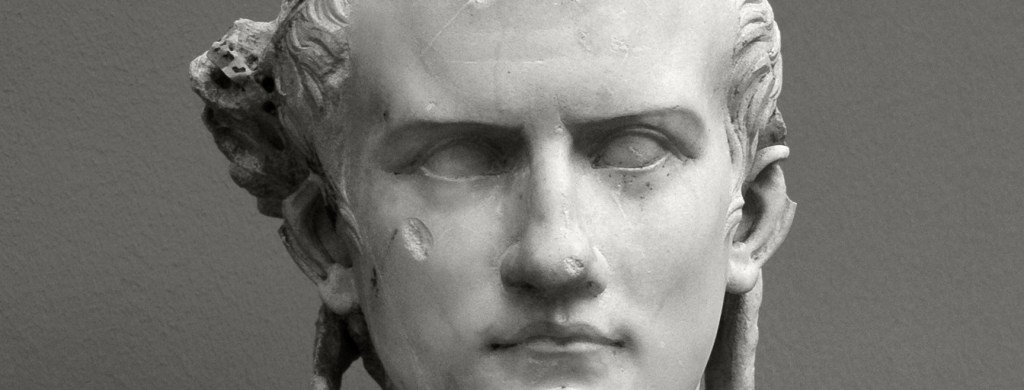
This kind of media-assisted conflation takes many forms. And it often doesn’t take too much to hold them up (as the City of God case demonstrates). Another example, which brings me back to the ‘Western Civilization’ discussion, is the curious tendency of some folks to build their identities and ideologies around the white marble statues from ancient Romans and Greeks. They were doing this because they saw those statues as symbols of Western Civilization and, specifically, the whiteness of Western Civ. This kind of thing took off about a decade ago with the first Trump administration, where there was this wave of people using white marble statue images for their online avatars (among other things). The problem, of course, is that those white marble statues were originally painted and full of color.
The writer Jamelle Bouie brought this up in a recent piece:
Let me put it this way: Ancient Greek statuary, Roman statuary — we now know it was colorful, right? Like, we’ve lost the color; it’s eroded with time … What we have is the white marble. And I feel like the Hegseths and the Rubios and the far-right Twitter world, they are obsessed with the white marble and unable to see the actual history and truth and whatnot about those things.
All it takes, in this case, is people seeing photographs of white marble statues and then, over time, believing that they represent an accurate depiction of race, culture, and identity (literally white). It doesn’t matter that this isn’t true, and the gaps and contradictions get filled in with all kinds of ideological work. As Bouie says, people are literally unable–or perhaps unwilling–to see the actual histories and realities. Nell Irvin Painter discussed this very same white marble problem in her book on The History of White people.
This is one small, pernicious way that thousands of mediated images circulating around can shape misunderstandings and misrepresentations of the past…which have consequences in the present. If only the solution was as easy as getting the word out that history–and life–is often a lot more colorful and complex than our screens often seem to suggest.


Leave a Reply